
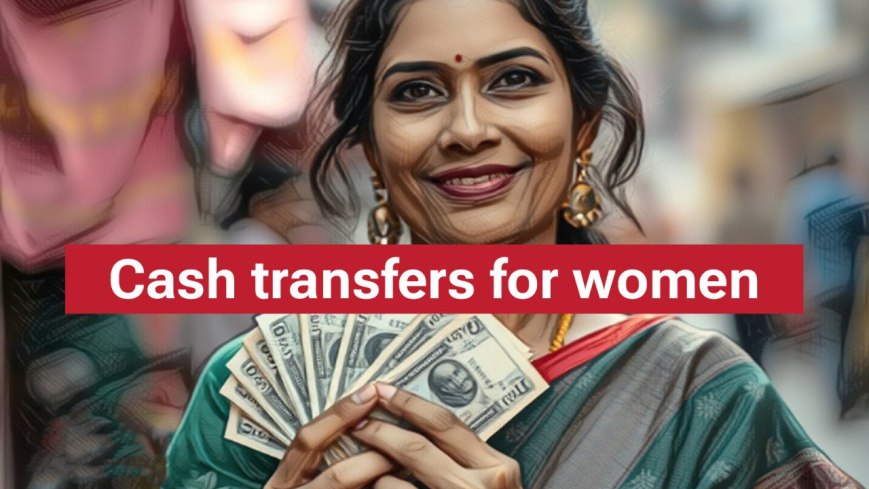
States are making direct cash transfers to women’s bank accounts. Maharashtra is in the process of urban local body elections at present, and it has already made promises of DBTs (Direct Benefit Transfers). On the face of it, this may seem appealing, but this policy is inefficient in its true character. To bring women to a status equal to that of men, holistic development with sustained state support is essential. Cash transfers may appear appealing, but real change comes through systemic state intervention.
Systemic change alters the underlying system itself, thus bringing permanent and natural change instead of temporary and forced change. For example, manufacturing sanitary pads in bulk naturally makes cheap pads available, reducing reliance on unhygienic cloth. Similarly, instituting girls’ schools or gyms naturally supports girls’ education in a safer environment, thus bringing higher enrolment. Other initiatives could include developing safety infrastructure for women, women’s toilets in public places, restrooms at workplaces, and employing police personnel at night to improve safety conditions for women. All these require sustained state effort.
DBT transfers place the burden of using cash responsibly on the individual citizen. These funds can be appropriated by men to meet daily consumption needs instead of being used by the target individuals. Poor women may use them to meet the health expenses of their husbands. The likelihood of misallocation of resources increases in socially unsupportive circumstances.
The status of women can improve only when efforts are made in all directions rather than just economic ones. Social support from families is necessary to bring women and children outdoors. Safety infrastructure for women is a primary need of families to liberalise them towards girls’ mobility and education. Awareness about nutrition and menstrual health can improve physical well-being. Supportive infrastructure at workplaces enables women’s participation in the workforce. Paid menstrual leave also supports them. Efforts need to be made in these directions.
Cash transfers function largely as appeasement policies used by politicians to maintain their power. This represents a reckless use of public funds with limited long-term benefit. Poverty cannot be eliminated through GDP growth alone; it requires policy formulation and capital investment for employment generation. States have limited resources. Mindful allocation of these limited resources can bring development. Spending on cash transfers reduces the budget available for real and holistic development. Taxes are collected to be used by the state for the common good; thus, these taxes must be used for long-term development rather than short-term appeasement.
Discover more from newscape.in
Subscribe to get the latest posts sent to your email.
Anyone else tried phwinvisit? I just spent some time on it, and I’m digging it. Lots to do and see. Seriously, go check it out phwinvisit.