
The Right to Disconnect Bill, 2025, introduced by Supriya Sule in the Lok Sabha, seeks to provide legal protection to employees from excessive work beyond prescribed working hours. In an era where technology has blurred the boundary between professional and personal life, ensuring a work–life balance has become essential for the mental, social, and physical well-being of individuals. This essay argues in favour of granting statutory recognition to the right to disconnect.
Although corporations formally define working hours through employment contracts, employees are frequently compelled to work beyond these limits. Fear of job loss, lack of bargaining power, and performance pressures prevent workers from resisting such exploitation. Often, employers assign tasks with unrealistic deadlines, indirectly forcing employees to continue working after office hours. Such practices reflect a profit-oriented mindset that prioritises productivity over human dignity, exploiting employees’ insecurity. Therefore, legal protection is necessary to prevent this systemic overreach and to allow employees to disengage from work after official hours without fear of reprisal.
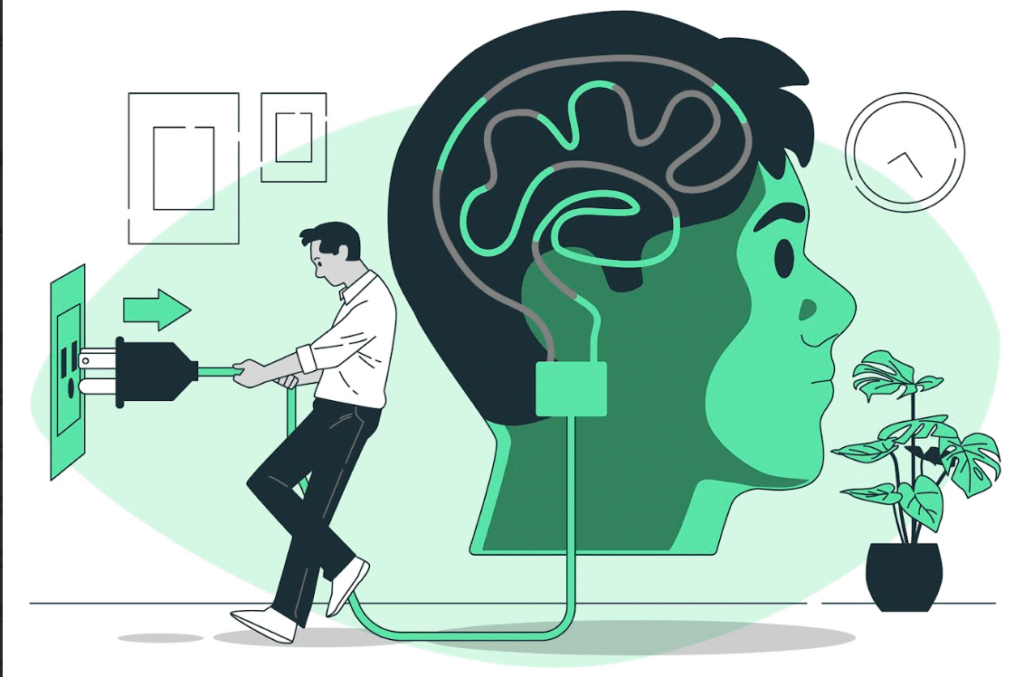
Modern office work is largely unending. Even after achieving set targets, new milestones are immediately imposed. The pressure to remain efficient, competitive, and result-oriented creates a cycle of constant stress. While achievements offer momentary satisfaction, the prolonged process of work is mentally exhausting. Continuous stress and burnout can have severe consequences for mental health, including anxiety and depression. Mandating adherence to work hours would allow employees time to rest, relax, and engage in recreational or social activities, which are vital for psychological well-being.
Excessive working hours also weaken social relationships. Limited time with family and friends risks reducing individuals to mere instruments of productivity, detached from empathy, care, and compassion. By restricting work to defined hours, employees would be able to nurture personal relationships and develop humane values such as cooperation, respect, and emotional understanding. Although relationships may bring their own challenges, they enrich human experience and provide social support systems that work alone cannot offer.
Furthermore, prolonged sitting and constant travel associated with extended work hours adversely affect physical health. Post-work hours enable individuals to exercise, maintain healthy routines, pursue spiritual well-being, and attend to personal needs. Such activities are indispensable for long-term physical fitness and overall quality of life.
In conclusion, maintaining a work–life balance is crucial for holistic well-being. The right to disconnect prevents life from being skewed entirely towards work and instead allows it to expand in multiple meaningful directions. However, for this right to be effective, it must be complemented by statutory limits on working hours, ensuring that work–life balance is not merely aspirational but practically achievable.
Discover more from newscape.in
Subscribe to get the latest posts sent to your email.